زيت وزعتر · zeit w za’atar, “oil and za’atar”
A tradition passed around the table.
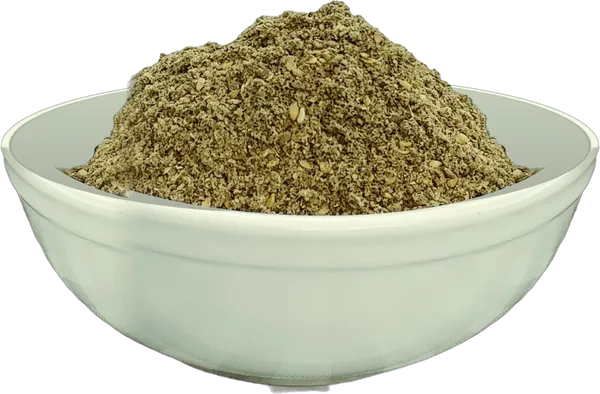
In Syria, za’atar is everyday food: a bowl of it beside a bowl of olive oil, warm bread torn by hand, and family around the breakfast table.
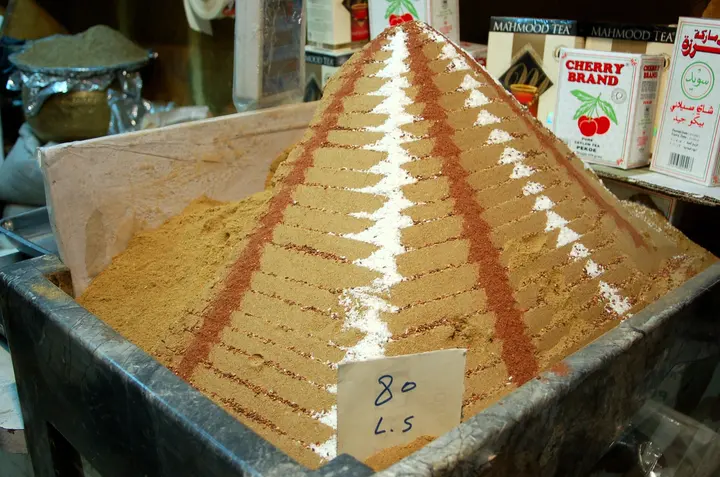
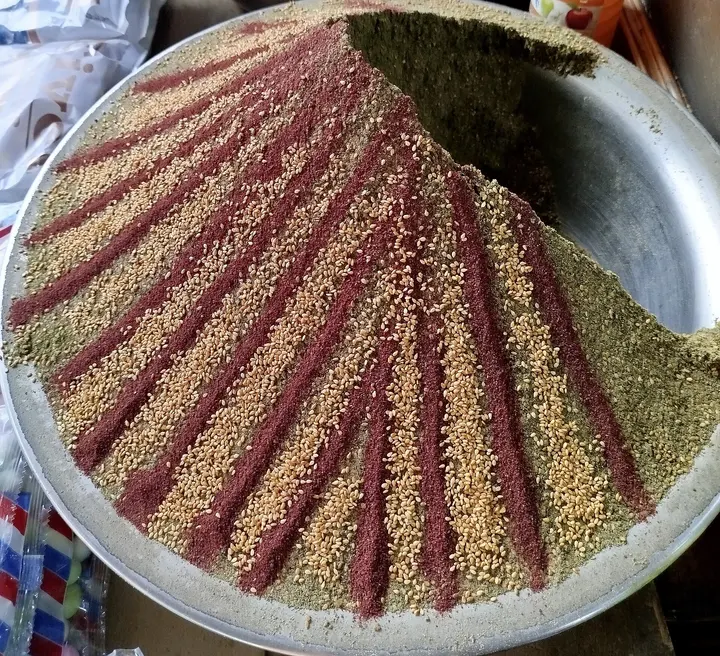
Za’atar in a shop in Aleppo
- Mornings, with warm bread and olive oil.
- Baked onto dough as manakish.
- Packed for anyone far from home.
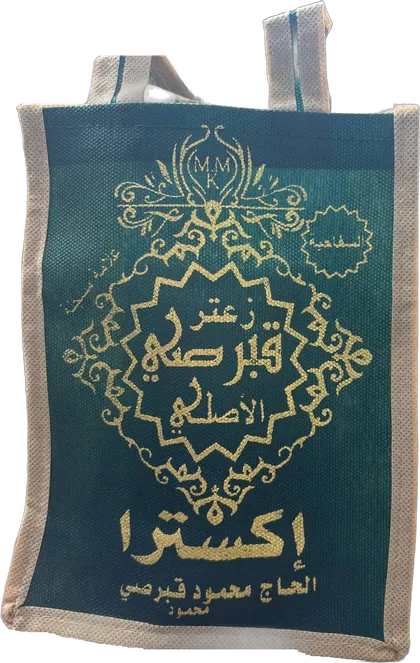
Yours was blended in Aleppo, at the shop of Al-Hajj Mahmoud Kobrusy, near the Citadel.
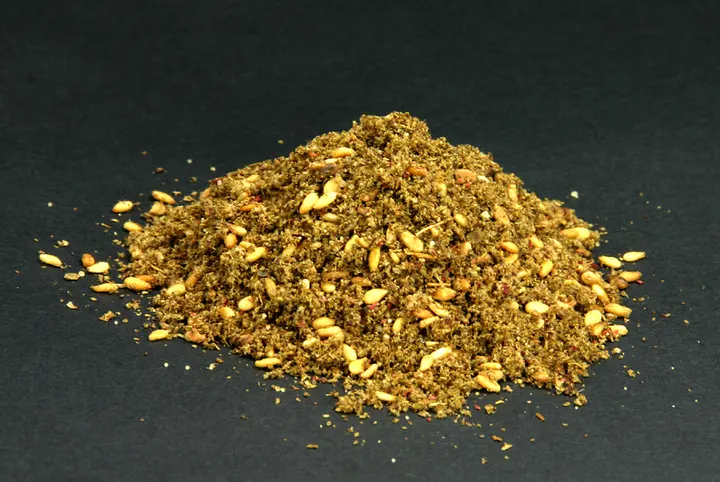
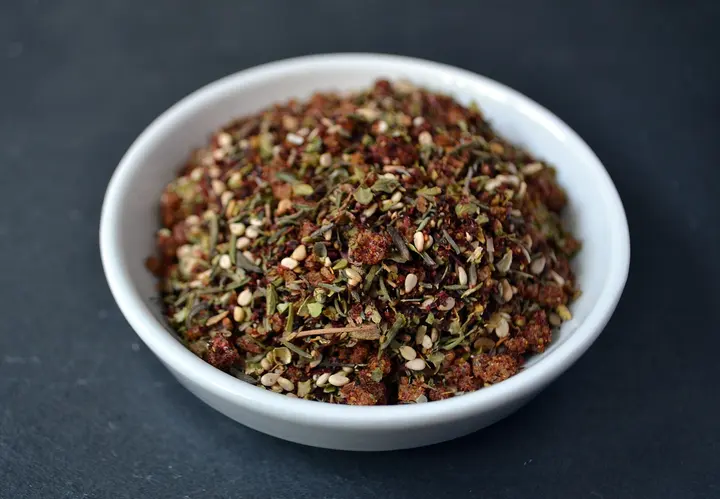
Nine ingredients. From your label.
- Za’atar leavesورق زعتر
- Fennelشمرة
- Aniseيانسون
- Roasted chickpeasقضامة
- Cuminكمون
- Corianderكزبرة
- Sumacحمض سماق
- Sesameسمسم كامل الدسم
- Saltملح
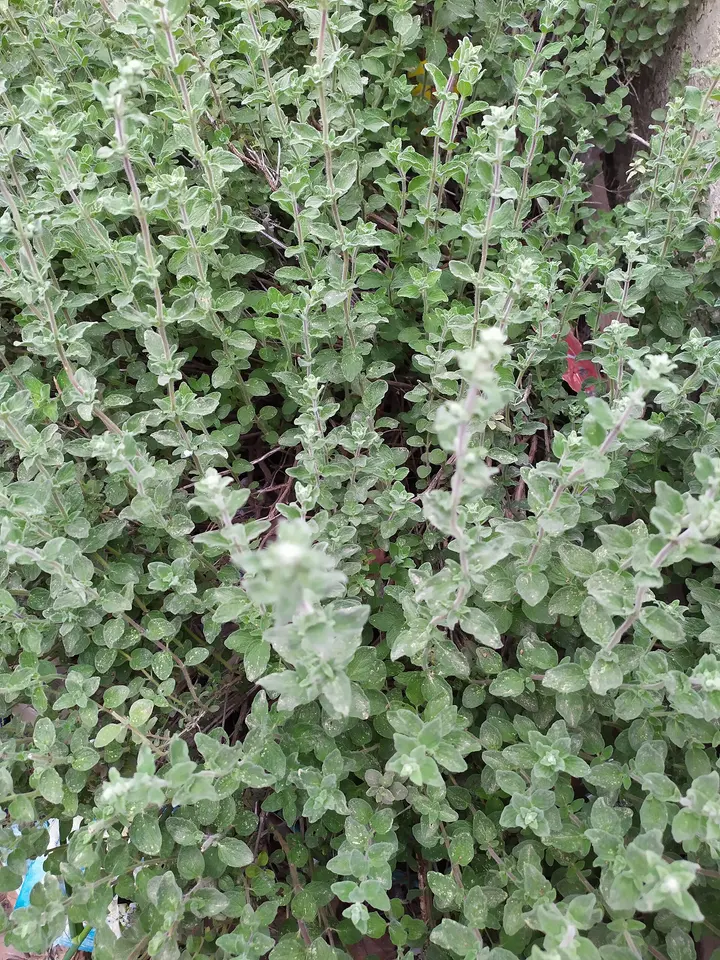 ورق زعتر
Za’atar leaves
The wild herb the whole blend is named after. Dried, ground, earthy and green.
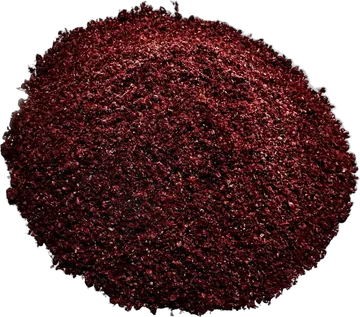
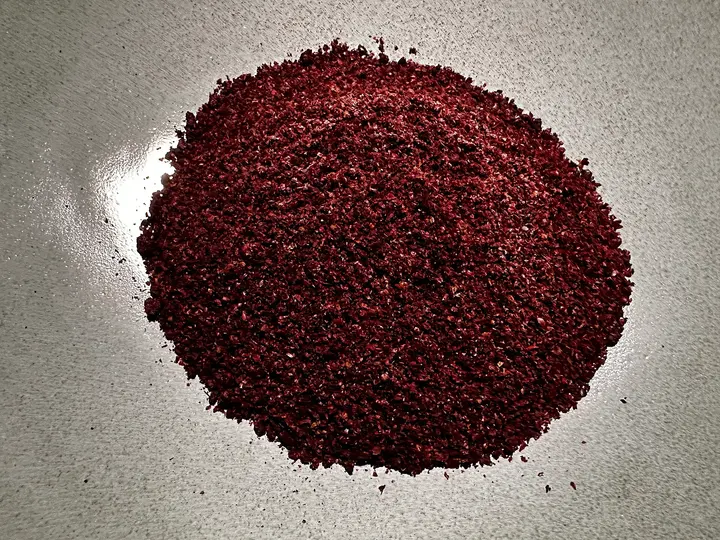 حمض سماق
Sumac
Ground red berries. They bring the bright, lemony sourness.
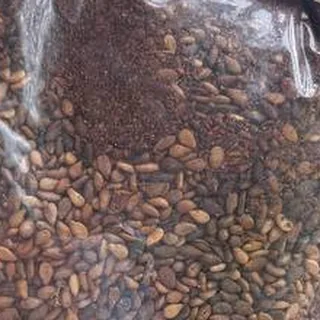 سمسم كامل الدسم
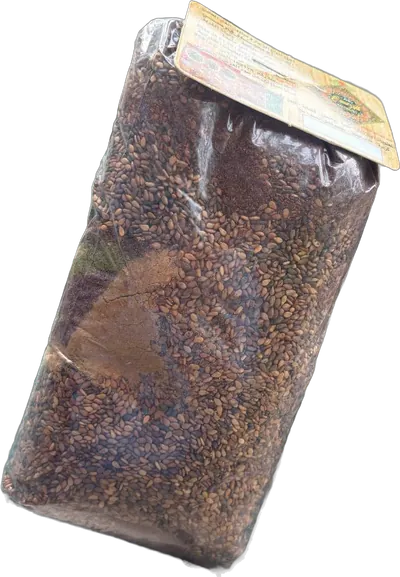
Sesame
Whole, full-fat sesame, toasted for a nutty crunch. Most of what you see in the bag.
And, in smaller measure:
Fennel شمرة
A soft, sweet hint of liquorice.
Anise يانسون
Small, fragrant seeds, sweet and warm.
Roasted chickpeas قضامة
Ground qudameh, for body and a toasty note.
Cumin كمون
Warm and earthy.
Coriander كزبرة
Round seeds, gently citrusy.
Salt ملح
Just enough to bring it together.
How it’s enjoyed.
The simplest way is the oldest one.
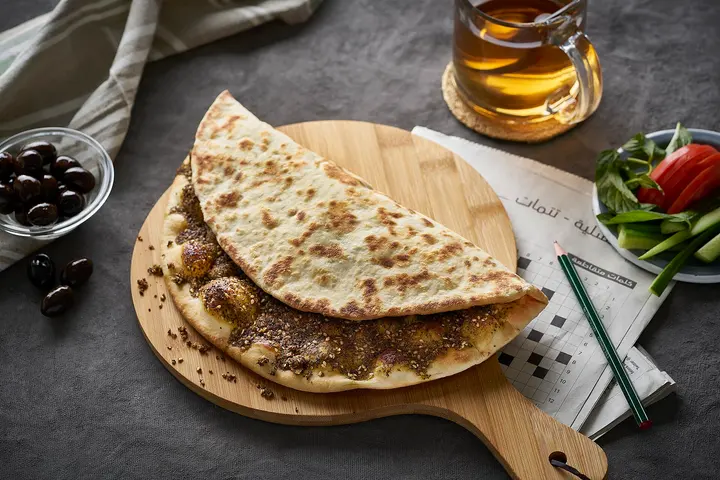
Or spread it with olive oil on fresh dough and bake it: manakish, a breakfast favourite across Syria and the Levant.